Nottingham Tree Surgery
and Arborist Services
Tree Surgeon Nottingham | Professional Arborist & Tree Surgery Services
Residential & Commercial Tree Surgeons
New Drone Tree Survey Service!
If you're looking for a tree surgeon in Nottingham, George Beck has been climbing, cutting and caring for trees across the city and its suburbs for over 20 years, and it's still George or one of his small team who turns up on site, not a subcontractor sent out by a call centre. Nottingham isn't one uniform patch of ground: the city sits across a ridge of Sherwood sandstone that drains fast in summer, so gardens in Wollaton, Beeston and Bramcote often show conifers and mature beeches under real drought stress by August, while the lower ground nearer the Trent, around West Bridgford and Radcliffe on Trent, sits on heavier clay that holds water and can loosen a root plate after a wet winter storm. Out towards Hucknall and the old coalfield edge the ground has its own history again, shaped by decades of mining subsidence rather than river clay, and trees on made-up ground there can lean or root unevenly in ways a soil map alone won't show.
Quick Free Estimate - No Obligation
Fully Insured • Response within 15 mins
🔒 Your details are safe with us. No spam, ever.
That difference in ground condition changes how a tree gets checked over and rigged, not just how it's cut, which is one reason covering a whole city rather than a single town means building up a working knowledge of several different types of ground, not just one.
Large parts of the city also carry extra protection: Nottingham City Council keeps a Tree Preservation Order register, and Conservation Areas including The Park Estate, Lenton and Mapperley Park give blanket protection to trees above a certain size whether or not they're individually listed. That means a felling or pollarding job in those areas often needs council sign-off before work can start -- something we check before ever quoting, and can handle for you through our TPO and Conservation Area application service. Because Nottingham is a full city rather than one town, the jobs that come in cover a wider range too: a hedge trim in a Clifton semi one week, a drone survey of a tall beech that's awkward and risky to climb safely the next, and a multi-tree clearance for a site developer or landlord the week after that -- each calling for a slightly different mix of certificates, equipment and paperwork, set out area by area and job by job below rather than folded into one generic description of tree surgery that reads the same whatever the job actually involves.
What's Covered in a Nottingham Tree Surgery Quote
What's Covered in a Nottingham Tree Surgery Quote
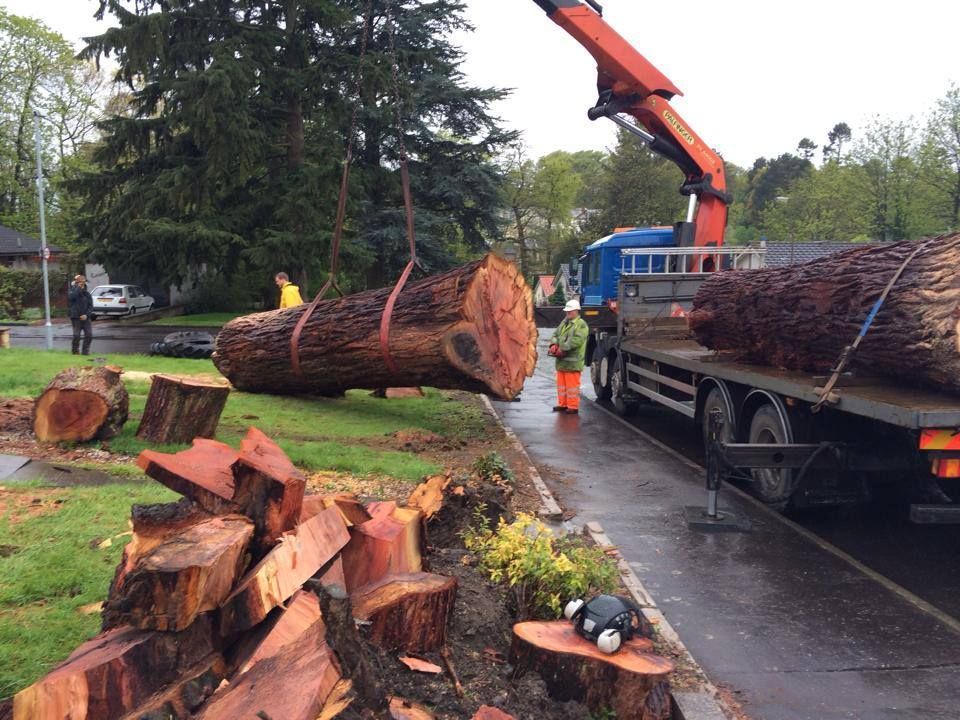
from a single leaning garden tree to large-scale commercial site clearance, with the wood cut down to sections that can be carried out through gates and side passages rather than dropped in one piece, and the trunk sectioned to a size that's practical to move or leave stacked as logs if you'd like to keep some for firewood
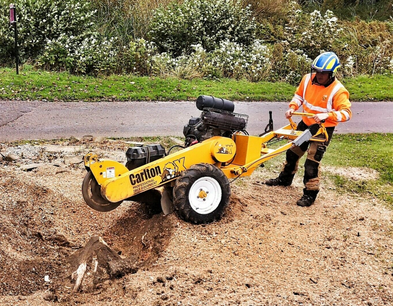
Stump grinding and removal
with the ground left level enough afterwards for turf, planting or a paved surface, and the loose chippings from the grind either taken away or raked back into the hole
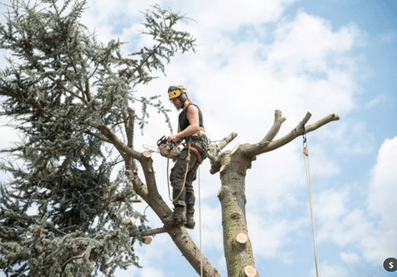
Pruning, crown thinning, crown lifting, crown reduction and crown cleaning
matched to the tree's species and the reason for the work -- light and access for a lawn underneath, storm resilience for an exposed specimen, or simply tidying growth back to a previous shape -- rather than one generic cut applied to everything
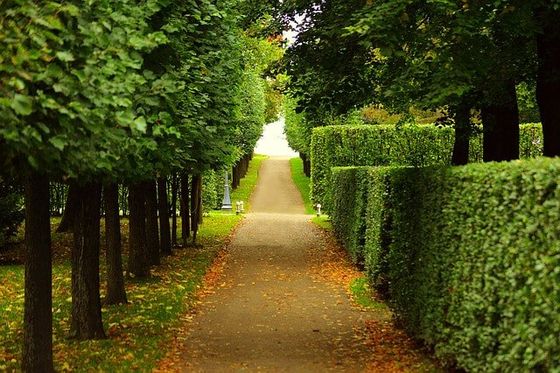
Hedge trimming
hedge cutting and full removal of hedges or hedgerows that are no longer wanted, including overgrown boundary hedges between neighbouring gardens that neither side has kept on top of for a few years
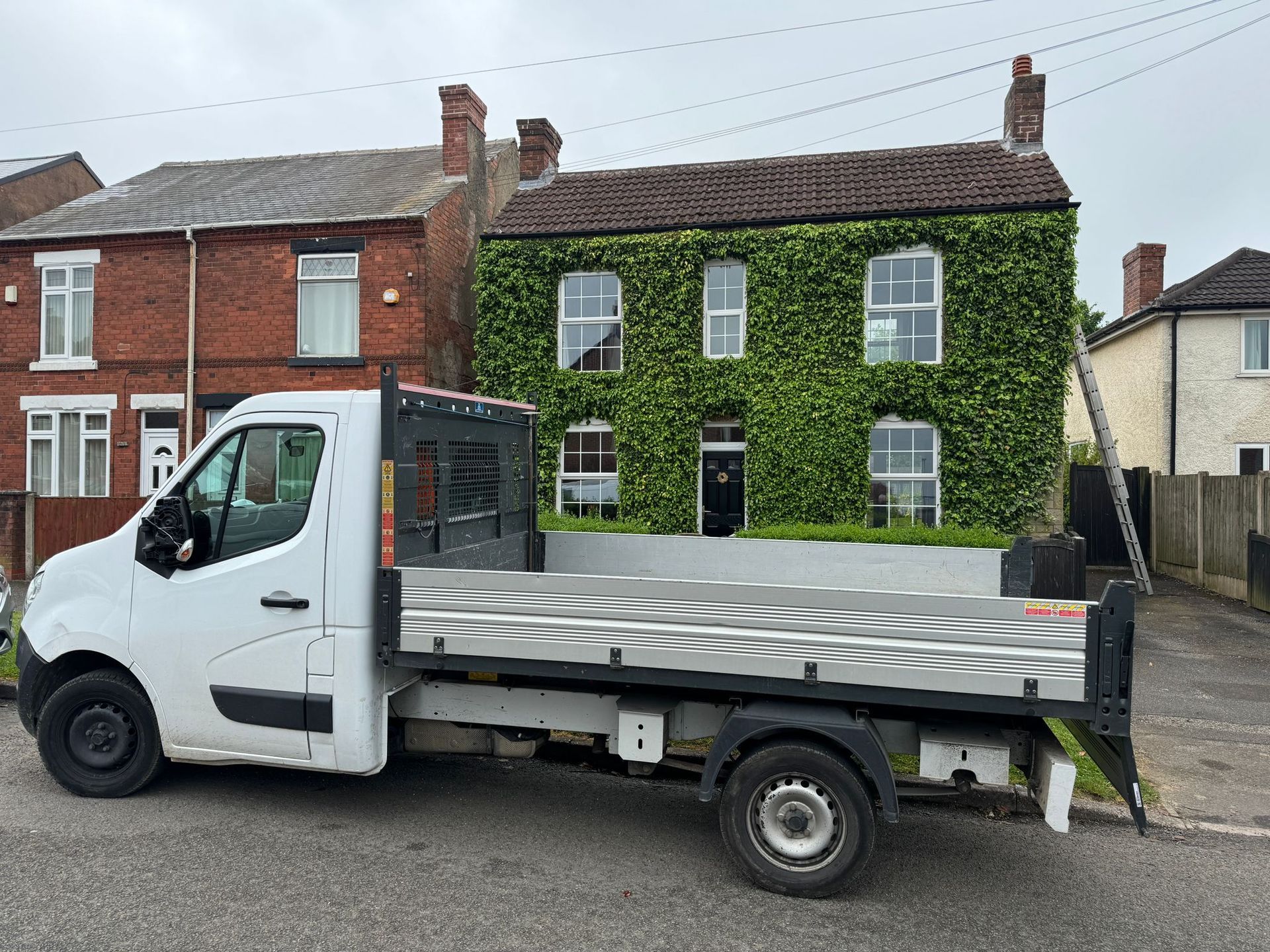
Ivy removal from trunks and crowns
where it's affecting a tree's health, hiding decay underneath that can't be seen or checked properly while it's covered, or adding enough weight and wind resistance in a mature crown to make the whole tree unstable in high wind
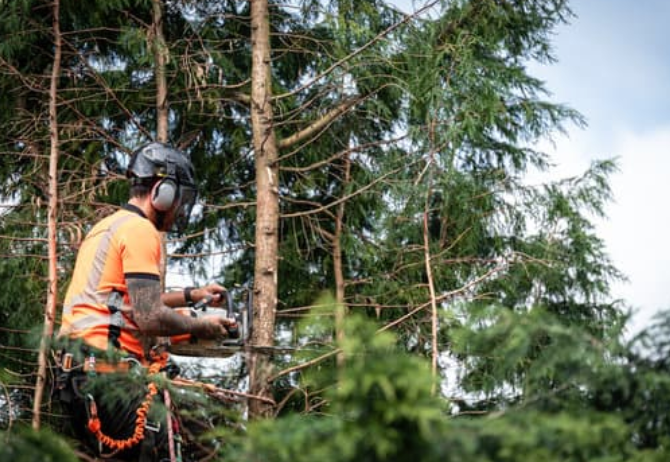
Conifer and leylandii trimming,
shaping, reduction, removal and stump grinding, for the tall boundary screens common across Nottingham's 1970s and 80s estates, where a hedge planted decades ago as a low screen has often grown well past the height anyone originally intended
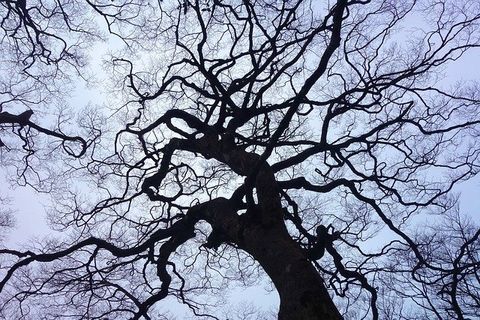
Deadwooding
removing dead or dying limbs before they fail on their own, particularly in mature trees overhanging a driveway, patio, garden shed or a neighbour's garden where a falling limb would cause real damage
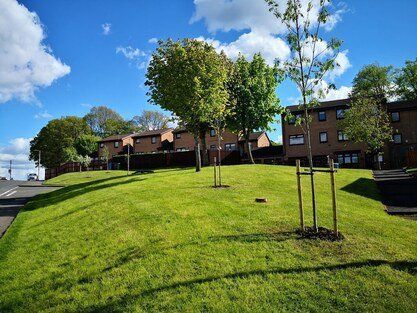
Tree planting, pollarding and coppicing
where it's affecting a tree's health, hiding decay underneath that can't be seen or checked properly while it's covered, or adding enough weight and wind resistance in a mature crown to make the whole tree unstable in high wind

Drone tree survey
standard tree survey, written tree report and safety inspection, for trees that are too tall, too decayed, or too awkward to check safely on foot, or simply where a written report is needed for a file rather than a verbal opinion on the day
- TPO and Conservation Area application support, including drawing up the supporting report, photographing the tree and its condition, and liaising directly with council planning officers so you're not trying to interpret planning paperwork alone
- Commercial site clearance and vegetation management for developers, letting agents and landlords managing multiple properties or a single larger site, including clearing overgrown boundary vegetation ahead of a sale, letting or planning application
- Emergency storm damage response, including making a hazardous hanging branch or split trunk safe on the day it's reported, even where the full removal or clear-up has to follow on a later visit
- Windblown and part-blown tree work, where a tree has been partially uprooted by wind but hasn't fully come down -- often the most dangerous kind of job, since the tree is under tension and can move unexpectedly once the first cut is made
- Debris removal and wood chipping, included as standard on every job, with chippings taken away or spread on site as mulch if you'd rather keep them for the borders
- Hedgerow and boundary vegetation management for larger gardens and rural-edge properties on the outskirts of the city, including bramble and scrub clearance along a boundary line that's become impassable
- 24/7 emergency callout for storm damage, fallen trees and hazardous branches across Nottingham and the surrounding towns, with priority given to anything blocking a road, driveway or access route
- Root pruning and root management where roots are lifting a path, patio or nearby wall, carried out carefully enough to deal with the immediate problem without destabilising the tree itself
- Advice on tree health where a customer isn't sure whether a tree needs work at all -- a second opinion on a tree a neighbour or a previous quote has flagged as a concern, given honestly even where the answer is that nothing needs doing yet
- Site clearance ahead of building work, an extension, or a driveway installation, coordinated with the trades or the developer so the ground is ready by the date it's actually needed rather than left to chance
Not Included / Costed Separately
- Stump grinding is priced and charged separately when it wasn't part of the original removal job, so say upfront if you want the stump gone rather than left to rot down over the following years
- Specialist access equipment such as a cherry picker, crane or MEWP is costed individually -- it's only brought in where a tree's height or position genuinely needs it, and it does raise the price of the job compared with a tree that can be climbed
- Work on a tree covered by a Tree Preservation Order or inside a Conservation Area can't start until the council has given written consent -- this is checked before quoting, but an application can add real time to the schedule, sometimes several weeks depending on how quickly the local planning department responds
- Work during bird nesting season (1 March to 31 July) may be limited or delayed if an active nest is found, since disturbing one is a criminal offence under the Wildlife and Countryside Act, and this applies just as much to a hedge trim as to a full felling job
- A phone estimate is a rough guide only -- a firm price needs a site visit, since access and the true scale of the job change the cost more than the tree's raw size or height alone
- Waste removal from a garden that already has cut material piled up from someone else's earlier work isn't automatically included in a new quote -- flag it when booking so it can be looked at and priced properly rather than assumed
- Replanting, turfing or landscaping after a stump is removed isn't part of the tree work itself and would need to be arranged separately with a landscaper or gardener
- Access across a neighbour's land or property, where that's the only practical route to a tree, needs the neighbour's agreement in place before work starts -- this is worth sorting out before the site visit if it's likely to apply
- Painting or treating a fresh cut with a wound sealant isn't standard practice on most modern pruning work, since current arboricultural guidance generally favours leaving a clean cut to heal naturally rather than sealing it
- Weekend and out-of-hours work outside a genuine emergency is scheduled rather than guaranteed on demand, since routine jobs are booked in around existing commitments the same as any trade
- A drone survey isn't a substitute for a full ground inspection where the concern is about root health, soil condition or something only visible up close -- it's the right tool for a high, hard-to-reach crown, not for every kind of tree problem
From Enquiry to Clear-Up: How a Nottingham Job Is Run
Get in touch
Call or message with a few details about the tree and the problem -- what it is, roughly how tall it looks, whether it's on your own property or overhangs a boundary, and why you're getting it looked at. George or a team member talks it through on the phone, works out whether it's routine or urgent, and arranges a free site visit, often within a day or two. Storm damage, a split trunk or a branch hanging over a path is treated differently -- that's covered around the clock, seven days a week, not just during office hours, and gets a same-day response wherever it's genuinely unsafe to leave.
Site visit and inspection
A qualified arborist comes out, measures the tree's height, trunk and crown width, checks access for equipment and vehicles along the route from the road to the tree itself, and looks over the wood for decay, cracks, included bark or dead limbs that aren't always obvious from the ground. This is also when it's confirmed whether the tree is covered by a Tree Preservation Order or sits inside a Conservation Area, since that changes what can legally happen next and how the job gets priced and scheduled from here.
Written quote
You get a clear price for the agreed work -- felling, pruning, stump grinding or whatever's needed -- with debris removal included as standard and any separately-priced extras, such as stump grinding or specialist access equipment, set out upfront rather than added on afterwards once the crew is already on site. If council consent is needed first, that's flagged here too, along with a realistic idea of how long an application might take and what it means for scheduling the actual work.
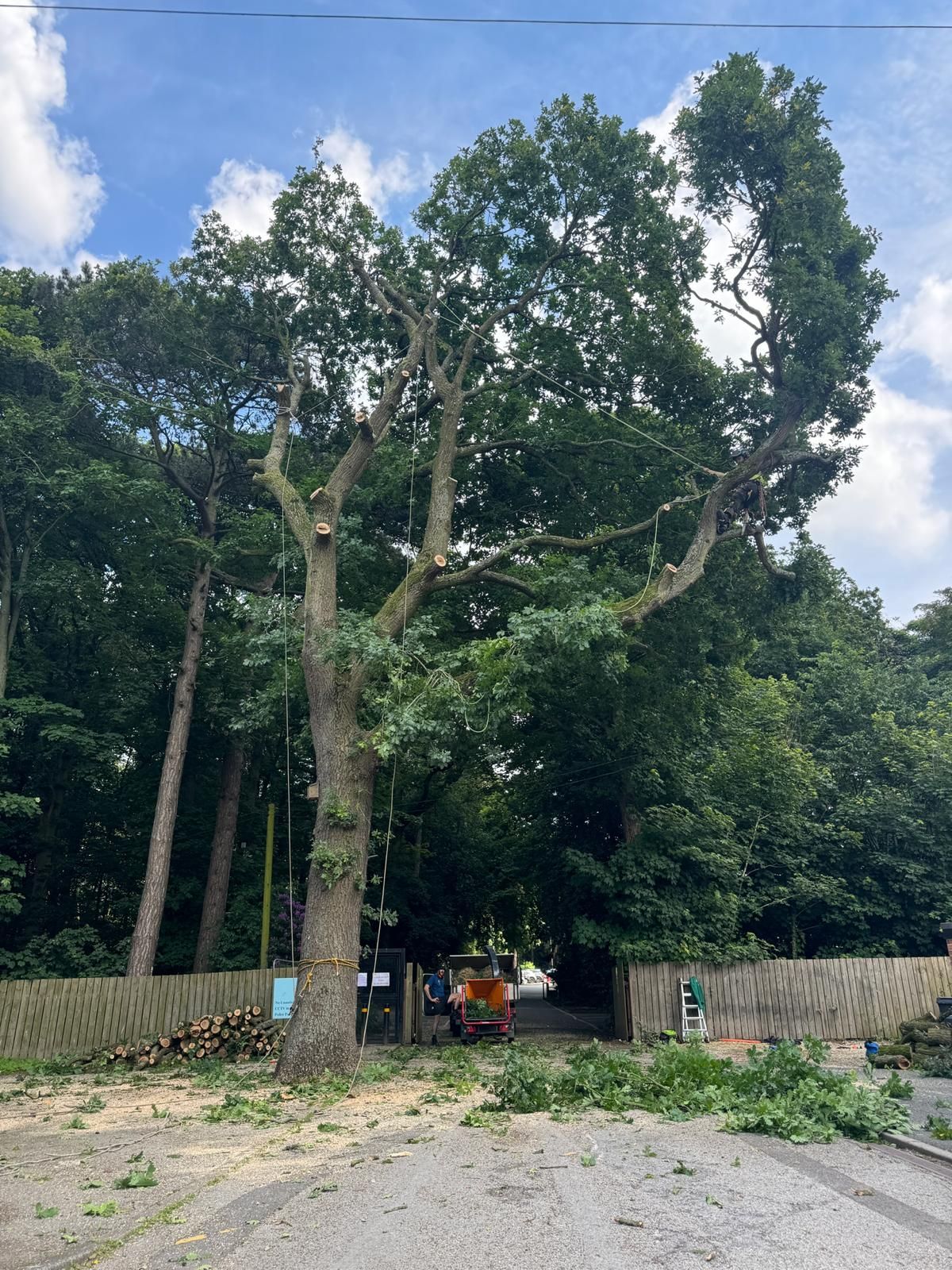
- The work itself -- The team carries out the job using ropes, harnesses and rigging for controlled sectional dismantling, or a cherry picker or MEWP where the tree's height or position calls for it, with a chipper on site to process branches and brash as the job progresses rather than leaving a pile to deal with at the end. Fencing, greenhouses, sheds and garden features close to the tree are protected or worked around rather than treated as an afterthought. Larger or multi-tree jobs, including commercial clearance work, are scheduled with enough crew and equipment to keep the site safe and moving rather than stretched over several separate visits, with a lead arborist coordinating the sequence so trees aren't felled or rigged in an order that puts access to the next one at risk. On a technical job -- a large, previously unpruned crown, or a tree standing close to a building or overhead line -- the sequence of cuts is planned out before the climber goes up, rather than worked out branch by branch on the way, since the order a crown gets reduced in affects how the whole tree balances and moves as weight comes off it.
- Clean-up and handover -- Cut material is chipped and either taken away or spread on site as mulch if you'd rather keep it, the ground is raked over and left level and tidy, and the site is checked over for stray brash, sawdust or equipment before the team leaves. On a stump grinding job the loose chippings from the stump itself are raked back into the hole so the area is close to ready for turf or planting straight away rather than left as a bare patch.
- Paperwork, if needed -- For jobs on a protected tree, any Tree Preservation Order or Conservation Area application, supporting report and council correspondence is handled as part of the job rather than left for you to sort out afterwards. Written tree reports and safety inspection documents, including from a drone survey, are also provided where a job needs one on file for insurance, a mortgage lender, a letting agreement or a planning application, so there's a record of what was found and what was done, not just a memory of a phone call.
Request Quote
What Affects the Price of a Nottingham Tree Job
There's no single price list for tree work in Nottingham, because the cost of any job comes down to the tree itself -- its height, species and how sound or decayed the wood is -- plus how hard it is to get equipment and people to it. A leylandii hedge reduction next to a driveway with clear access is a straightforward job priced mostly on time and the volume of material to chip. Felling a mature oak backing onto a narrow Victorian terrace in Lenton is a different job entirely, where branches have to be roped down piece by piece rather than dropped, and where a chipper might need to be positioned in the street rather than the garden. Height and girth matter more than most people expect: a 25-metre copper beech that had never been pruned, of the kind reduced for a customer in The Park Estate, needs careful load calculation and rigging at every stage, which takes longer and needs more people on site than a smaller tree of the same species.
Stump grinding is priced separately from felling, so say upfront if you want the stump gone rather than left to rot down -- it's a different machine, sometimes a different visit, and a cost that's easy to forget when budgeting for the removal itself. Specialist access equipment -- a cherry picker, crane or MEWP -- adds to the cost but is only brought in where the tree's height or position genuinely needs it, not as standard on every job; a tree that can be climbed safely with ropes and a harness doesn't need a machine parked on the drive for two days.
Ground conditions play a part too: a tree on the clay lowland near West Bridgford or Radcliffe on Trent that's shown signs of a loosened root plate after a wet winter may need a slower, more cautious approach than the same species growing on the free-draining sandstone ridge through Wollaton and Bramcote, simply because the ground itself is less predictable underfoot and around the root system.
If a Tree Preservation Order or Conservation Area application has to go in first, that can add real time to the schedule -- sometimes several weeks, depending on how quickly the council responds -- even where it doesn't change the felling or pruning price itself once consent is given. Commercial site clearance and multi-tree jobs are priced as a whole rather than tree by tree, since crew time, chipper hire and waste disposal are shared across the site rather than repeated for each individual tree. A drone tree survey is priced differently again to a walk-round inspection, reflecting the extra kit and flight planning involved, but it's often the more practical option for a tall or awkward tree where getting a clear, safe first look from the ground isn't really possible.
Timing can affect how quickly work gets scheduled, if not always the price itself. After a spell of high winds, emergency callouts for storm damage take priority, which can push back a routine hedge trim or crown reduction booked for the same week -- something we'll always explain honestly rather than let a routine job slip without a reason. Summer tends to be the busier season for planned pruning and hedge work, since growth is easiest to see and shape, while felling and stump grinding spread more evenly across the year. None of this changes the core rule: the only way to get a number you can actually rely on is a site visit, because a tree's true height, the state of the wood, and the access into the garden are things a phone call can't show.
The condition of the wood itself can shift a price in either direction, and it's not always obvious from the ground. A tree that looks solid but turns out to have internal decay once the first cut goes in can actually be quicker to fell, since softened wood is easier to cut through, but it also needs a more cautious approach to rigging, since decayed timber can fail under a load that sound wood would hold without any issue. A dense, healthy hardwood is the opposite: harder and slower to cut, but far more predictable under load, which sometimes makes the more solid tree the more straightforward job on the day, even though it looks like the bigger undertaking on paper.
A written quote breaks the job down rather than giving a single lump figure, so it's clear what's included -- felling or pruning, debris removal and chipping as standard -- and what's priced separately, such as stump grinding, access equipment or a council application if one's needed. That matters most on larger or commercial jobs, where a vague verbal quote can easily grow once work is underway; a clear written breakdown from the start avoids that, and it's a reasonable thing to ask for from any tree surgeon, not just this one.
Species plays a bigger part in price than most people expect, too. A leylandii or a poplar grows quickly and is often soft and easy to cut, which keeps the labour side of a job down, but the sheer volume of material from a mature specimen of either can mean more time spent chipping and clearing than the felling itself takes. An oak or a beech, by contrast, is dense, heavy wood that takes longer to cut through safely and needs more careful rigging when a section is lowered rather than dropped, particularly close to a fence, a shed or a neighbouring garden. A dead or dying tree can be quicker to fell in one sense, since there's no crown to manage, but decayed wood is less predictable under load and often needs a more cautious approach and extra checks before the first cut goes in, which can add time rather than save it.
Access is usually the single biggest swing factor once the tree itself is accounted for. A front garden with a driveway right up to the tree and room to park a chipper is about as straightforward as it gets. A tree at the back of a terraced garden in Sneinton or Lenton, reachable only through a narrow side passage or over a shared fence, means everything -- ropes, a chainsaw, chipped material -- has to be carried or wheeled rather than driven in, which adds real time to even a modest job. It's one of the main things checked at the site visit, and one of the main reasons a phone estimate so often ends up wrong once someone's actually stood in the garden.
Price isn't the only thing worth weighing up when choosing who does the work, either. A cheaper quote that skips debris removal, doesn't check whether a tree is covered by a Tree Preservation Order, or turns up without proper insurance in place can end up costing more once those gaps get sorted out afterwards, or worse if something goes wrong on the day. That doesn't mean the highest quote is automatically the right one -- it means comparing quotes on price alone, without checking what's actually included and whether the crew is properly qualified and insured, tends to miss the parts that matter most once the work is actually under way.
It's worth asking any tree surgeon a few plain questions before booking, regardless of who ends up doing the job: what NPTC certificates the person actually climbing or cutting holds, whether public liability and employers' liability insurance is current and can be shown, and whether debris removal and a basic clean-up are included in the quoted price or charged as extras once the job's finished. A tradesperson confident in their own qualifications and cover won't mind being asked, and the answers usually say more about how a job will actually go than the headline price does on its own.
Nottingham Area by Area: Ground, Trees and Local Rules
| Area of Nottingham | Typical Ground & Common Trees | What Tends to Go Wrong | Extra Rules to Check |
|---|---|---|---|
| Wollaton, Beeston, Bramcote | Sandstone ridge, free-draining ground that dries out fast in a dry spell; mature beech, oak and tall conifer boundary screens are common across the older, larger gardens here | Drought stress and crown dieback in dry summers, especially in conifers planted too close together decades ago and now competing hard for the same limited water | Wollaton Park itself carries its own tree protections separate from the general city TPO register, and nearby streets sometimes fall under the same rules by association |
| West Bridgford, Radcliffe on Trent | Clay lowland close to the Trent that holds water long after rain has stopped, softening the ground around larger root systems | Root plates loosened by wet winters, occasional storm-felled trees on saturated ground where a tree that stood fine in a dry year comes under real strain in a wet one | Some streets sit within local Conservation Areas -- worth checking before pruning, not just before felling, since the same consent rules can apply to both |
| The Park Estate, Lenton, Mapperley Park | Established Victorian and Edwardian gardens with large specimen trees, many planted when the houses themselves were built well over a century ago | Old, previously unmanaged crowns needing a careful staged reduction over more than one visit rather than a first-time hard cut, which can shock a tree that's never been pruned | Conservation Area status gives blanket protection to trees above a certain size, so written consent is needed even for routine pruning, not just felling or removal |
| Sherwood, Carrington, Mapperley | Mixed suburban gardens with mature street trees planted along many of the older residential roads | Ivy overload on older trees left unchecked for years, hedges left to outgrow boundaries between properties until neither neighbour wants to be the one to raise it | Some street trees are owned and managed by the council rather than the householder, so it's worth checking ownership before assuming a tree is yours to have worked on |
| Clifton, Wilford | Newer estates and riverside ground close to the Trent, with younger, more uniform tree planting than the older parts of the city | Fast-growing leylandii screens between gardens that quickly outgrow their intended height, plus occasional flood-related root damage on the lowest-lying plots | Housing association or council land at the boundary can mean shared responsibility for a hedge or tree, which is worth clarifying before booking work on a boundary line |
| Hucknall, Bulwell and the old coalfield edge | Ground shaped by historic mining subsidence as much as by soil type, with some plots sitting on made-up or disturbed ground rather than natural strata | Leaning or unevenly rooted trees on made-up ground, where a tree can look healthy above ground while rooting into unstable fill below it | Any known subsidence history at the site is worth raising at the site visit, since it can change how cautiously a tree needs to be approached |
| Long Eaton, Ilkeston, Beeston fringe (our home patch) | Mixed clay and made ground close to the Erewash valley, generally similar in character to the western edge of Nottingham itself | Boundary hedges and garden trees grown out over several years without maintenance, often on properties where nobody's quite sure whose job it was to keep on top of them | Usually straightforward with no additional protection, though it's always checked, and being the local base means jobs here are often the quickest to schedule |
| Ruddington, Edwalton, Bingham and the southern villages | Mixed farmland-edge and garden soil, with more mature hedgerow and field-boundary trees than in the denser city suburbs | Overgrown field boundaries and hedgerows encroaching on gardens or driveways, plus the occasional large, isolated tree that's outgrown the space around it | Hedgerows here can fall under separate hedgerow protection rules if they border open countryside, which is checked where relevant |
What the NPTC Certificates Actually Mean for Your Trees
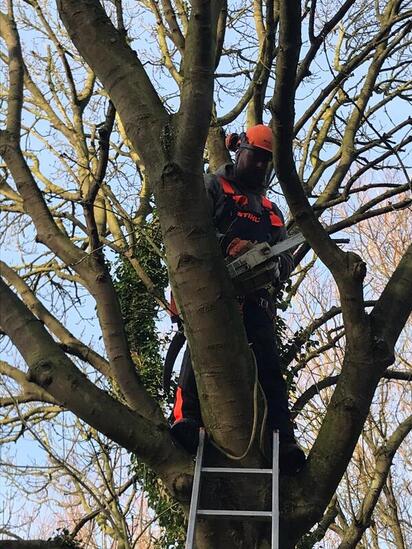
Anyone can call themselves a tree surgeon -- the City & Guilds NPTC Certificates of Competence are what separate that claim from someone who's actually been assessed doing the work, under supervision, against a fixed set of standards. George Beck's team holds the Level 2 groundwork certificates (chainsaw maintenance and cross-cutting, felling small trees, climbing and aerial rescue, working from a rope and harness, arboricultural ground work, branch removal and crown breakdown, powered pole pruner operation) plus the Level 3 certificates that cover the harder end of the trade: assisted felling, aerial tree pruning and rigging, felling medium and large trees over 760mm, dealing with interwoven stems and part-blown trees, emergency treework planning, individual windblown trees, and working from a rope, harness or MEWP. That last group matters most when a tree comes down, or half comes down, in a storm -- these are specific, assessed competences, not just experience picked up informally on the job.
What that looks like in practice varies across a city the size of Nottingham. David King, in The Park Estate, had a 25-metre copper beech that had never been pruned in its life reduced by 20% in height and width -- a job that leans hard on the aerial rigging and pruning certificates, since a tree of that size and age needs load calculated and controlled at every cut, not just climbed and trimmed.
Ruth Nettleship, in West Bridgford, had a large larch removed promptly, with the work finished the same day and the site left clean and tidy -- a smaller-scale job by comparison, but one that still draws on the felling and cross-cutting competences (0039-20, 0039-33), applied to a different species and a different garden. Karl Hall, in Alfreton, had trees cut back and hedges trimmed together in one visit, and described the team as fast and efficient, leaving the garden tidier than it started -- ordinary, regular maintenance rather than a dramatic removal, but the kind of job that makes up most of what actually gets booked week to week. Jennifer Leahy, in Long Eaton, had ivy cleared from a tree despite rainy weather on the day, praising a quick quote turnaround and a job finished well regardless of the conditions -- a reminder that the weather doesn't always cooperate, and a rained-off day isn't always a reason to push a job back.
Between them, those four jobs cover most of what a Nottingham tree surgeon actually gets asked to do: a demanding, technical reduction on a mature specimen tree; a straightforward but time-sensitive removal; routine hedge and tree maintenance; and an unglamorous but genuinely useful clearance job finished in poor weather. Holding the certificates that cover ground work, climbing, rigging and large-tree felling means the same small team can take on all four without subcontracting the harder end of the work out to someone else. Full public liability and employers' liability insurance is in place throughout, with documentation available on request before work starts -- worth asking for on any job, but particularly one near a boundary fence, a garage roof or a neighbour's garden, where a mistake is expensive for everyone involved, not just the tree.
The certificates themselves aren't a one-off box ticked years ago and forgotten about -- they cover distinct, separately-assessed skills, from the basic chainsaw maintenance and cross-cutting competence that underpins every job, through to the specialist emergency treework planning and individual windblown tree competences that only come into play when a storm has already done damage and a decision has to be made quickly and safely about what to cut first. That spread matters on a job like David King's copper beech, where getting the sequence of cuts and rigging wrong on a 25-metre tree that's never been pruned isn't just a question of a messy result -- it's a question of controlling several hundred kilograms of falling limb safely, in a garden, near a house. It matters just as much, in a quieter way, on an ordinary hedge trim or ivy clearance, where the same grounding in safe chainsaw use and site awareness is what keeps a routine job routine rather than turning into an incident.
Being small and locally run also means there's continuity from the first phone call to the last sweep of the garden -- the same person who quoted the job is often the one who climbs it, rather than a salesperson handing a job sheet to whichever crew is free that week. That's a genuine, practical difference on a job where the detail matters: knowing before the second visit that a particular limb was left for a reason, or that a customer specifically wanted the chippings kept rather than taken away, isn't something that survives being passed between several different people at a larger operation.
Not every tree is worth saving, and not every enquiry ends with the answer someone was hoping for. Where a tree's condition, position or protected status means the sensible advice is a smaller reduction rather than full removal, or waiting until nesting season has passed before touching a hedge, that's what gets said at the site visit -- not whatever answer books the job fastest. The same goes for cost: if a job doesn't need a cherry picker, or a stump doesn't need grinding out because it's tucked away where it won't cause a problem left to rot down naturally, that gets said too, rather than adding extras that weren't asked for and aren't actually necessary.
That approach shows up in the reviews as much as anywhere else. Jennifer Leahy's ivy clearance in Long Eaton went ahead despite rain on the day rather than being pushed back and re-quoted, because the job itself wasn't weather-dependent in a way that mattered, and she was told that honestly rather than given a vague excuse to delay. Ruth Nettleship's larch in West Bridgford came down promptly once booked, with no padding-out of the timescale to make a straightforward job look more involved than it was. Small details like that -- being upfront about what a job actually needs and how long it should genuinely take -- tend to matter more to how a job feels from the customer's side than the certificates on their own ever could.
The business is set up to be reached directly rather than through layers of admin: customers are invited to ask for George by name, and the team is available seven days a week, with the 24/7 emergency line kept separate for storm damage and genuinely hazardous trees rather than used to bump routine bookings up the queue. That's a deliberate choice about how the business runs, not just a line on a website -- a small team covering the whole of Nottingham and the surrounding towns only works if calls get answered by someone who actually knows the job, rather than a booking line that has to check with someone else before giving a straight answer.
Nottingham and the Ground We Cover It On
Nottingham genuinely isn't one type of ground, one type of garden or one set of local rules, and the area-by-area breakdown above reflects that rather than treating a job in The Park Estate and a job in Clifton as interchangeable. A drone tree survey might be needed simply because a tall ash at the back of a Sherwood garden leans over next door's conservatory roof and nobody particularly wants to send a climber up before a report's even been written. A commercial vegetation clearance for a housebuilder on the edge of Clifton might involve a dozen trees of mixed species and condition, priced and scheduled as one job rather than booked in piecemeal. A TPO application for a protected oak in Mapperley Park can end up taking longer to sort out with the council than the pruning itself takes to carry out on the day. That range of work, and the ground it happens on, is what the coverage below actually describes.
We're based just over the border from Nottingham in Long Eaton (20 Prince St, NG10), a few minutes off the A52, which puts most of the city and its suburbs within a short drive rather than a cross-county trip. Wollaton, Beeston, Bramcote, Mapperley, Sherwood, Lenton, Clifton, The Park Estate and West Bridgford are all regular jobs, and being close by means a genuine emergency -- a branch down over a driveway, a leaning tree after a storm -- can usually be reached quickly rather than queued behind a day's travelling from further out.
Beyond the city itself, the working area runs out to roughly 15-25 miles: Ruddington, Edwalton, Radcliffe on Trent, Bingham, Lowdham, Burton Joyce and Ravenshead to the east and south-east, Hucknall to the north, Ilkeston, Heanor, Ripley and Alfreton to the west, and Mansfield, Newark-on-Trent, Southwell and Worksop further out again. That radius isn't just a list pulled off a map -- it's roughly the distance a crew and a chipper can travel to and from a job in the same day without the travel time eating into a fair price, which matters more for a full day's felling or a commercial clearance than it does for a quick hedge trim.
Being based in Long Eaton also means the towns just over the Derbyshire border -- Ilkeston, Heanor, Ripley and Alfreton -- are often closer to reach than parts of Nottingham itself, despite the city being the main draw in the name. Karl Hall's job in Alfreton, cutting back trees and trimming hedges, is a good example of the kind of routine work that comes from that side of the working area just as often as from the city centre. Further out towards Mansfield, Newark-on-Trent, Southwell and Worksop, jobs tend to get booked in a little further ahead rather than same-day, simply because of the extra travel involved, though storm damage and hazardous trees are still covered as an emergency wherever they fall within the working radius.
Inside the city boundary itself, the mix of housing matters as much as the ground does: dense Victorian terraces in Lenton and Sneinton mean gardens are often small and access is tight, so equipment and rigging get planned around a narrow side passage or a shared boundary fence, while the larger plots and mature tree cover of The Park Estate and West Bridgford allow more room to work but usually come with more history -- older, larger trees that haven't been managed in years rather than younger, more predictable growth. The area-by-area table above covers the detail on soil, common species and local protection rules for each part of the city; day to day, the practical difference it makes is mostly in scheduling and equipment -- a job on the sandstone ridge through Wollaton and Bramcote is rarely held up by wet ground, where a job on the clay near West Bridgford or Radcliffe on Trent after a wet spell sometimes needs a different access route worked out on the day to avoid churning up a lawn or a driveway.
Newer estates around the edge of the city -- parts of Clifton, Bilborough, Aspley and Bulwell -- tend to bring a different kind of job again: younger trees planted as part of the original development, often a single species repeated along a whole street, which can mean the same problem, such as a fast-growing conifer that's outgrown its space, cropping up on several neighbouring plots in the same year. Older, more established suburbs like Sherwood and Carrington, laid out mostly before the Second World War, carry a wider mix of species and ages, so jobs there vary more from garden to garden even along the same road.
If you're just outside the areas listed, get in touch anyway -- the radius is a general guide rather than a hard line, and a job just past the edge of it is often still workable, particularly if it can be scheduled alongside another job nearby on the same day.
Getting to and from a job efficiently also keeps costs down for everyone within the working area, not just the customer whose garden happens to be on the way. Jobs are grouped by area where the timing allows it, so a hedge trim in Beeston and a crown reduction a street or two away might be scheduled on the same day rather than as two separate trips out from Long Eaton on different weeks.
Response times vary a bit by direction from Long Eaton, not just by distance on a map. A job in Beeston, Wollaton or the western side of Nottingham is close enough that an emergency callout can usually be reached within the hour in daylight. A job across the city in Mapperley, Sherwood or Carrington, or out towards Bingham or Radcliffe on Trent, generally takes longer purely because of the road network -- routes into and across Nottingham can slow down at peak times in a way a rural run out to Southwell or Ravenshead doesn't. None of that changes whether a job gets covered, only roughly how soon, and it's factored honestly into what's said on the phone rather than promised and missed.
The rural fringe of the working area -- towards Ravenshead, Southwell, Newark-on-Trent and Worksop -- tends to bring a different mix of work again: larger gardens with more established hedgerow and boundary trees, the odd orchard or paddock tree that's outgrown its space, and less of the tight-access, terraced-garden work that's typical closer to the city centre. Vehicles and equipment can usually get much closer to the tree in these settings, which keeps costs down on the access side even where the trees themselves are often larger and older than a typical suburban garden tree.
Green space matters for this trade in a way that's easy to overlook until you're actually driving between jobs. Nottingham has more parks, allotments and tree-lined avenues than its size might suggest, and gardens backing onto Wollaton Park, the Arboretum, Colwick Park or one of the smaller green corridors along the Trent tend to have older, larger trees than a garden of the same size on a newer estate, simply because they've been growing undisturbed for longer next to open ground.
Seasonal patterns show up across the whole working area in fairly predictable ways, even if the exact timing shifts year to year. Storm-related emergency callouts cluster in autumn and winter, when named storms and stronger prevailing winds put the most strain on trees that have just come into leaf drop or are still carrying a full crown into an early gale. Hedge trimming and formative pruning bookings pick up through late spring and summer, once growth is visible and it's obvious what actually needs cutting back. Felling and stump grinding are less seasonal and get booked fairly evenly across the year, though anything on a protected tree is best started well before nesting season if there's any flexibility in the timing, simply to avoid a Tree Preservation Order application and a nesting-season delay stacking up back to back.
Book a Free Site Visit Before the Next Nottingham Storm Season
Deadwood and storm-loosened limbs don't get safer left alone -- especially on the heavier clay ground near the Trent, where a wet winter can loosen a root plate without it being obvious just from looking at the tree from the ground, or on the sandstone ridge through Wollaton and Bramcote, where a dry summer can leave a stressed conifer more brittle than it looks. A site visit is free and doesn't commit you to anything, so it makes sense to get a tree looked at as soon as you're worried about it rather than wait for it to fail on its own timetable and become an emergency instead of a planned job. Whether it's a single garden tree in Wollaton, a protected beech in The Park Estate, an overgrown hedge in Clifton, or a multi-tree clearance for a commercial
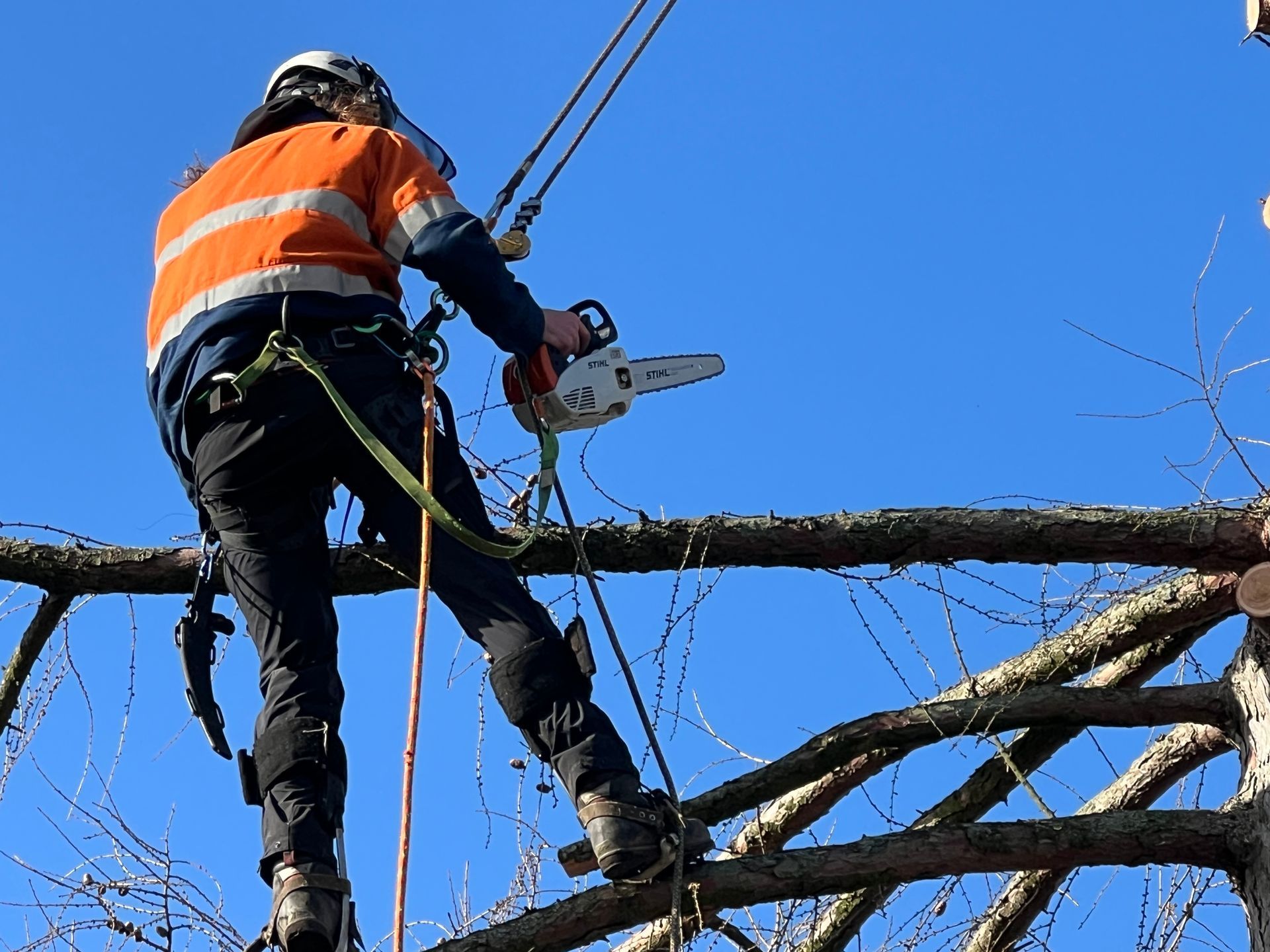
site out towards Bingham, the same small team handles the job from the first phone call through to the final clean-up, with the paperwork sorted along the way if a council application is needed and nothing left half-finished for you to chase up afterwards.A free site visit costs nothing and takes the guesswork out of what's otherwise a difficult thing to judge from the ground -- how sound a trunk really is, how a crown will behave once weight comes off it, or whether a job needs council consent before it can even be booked in. Getting that looked at properly, by someone who can point to the qualifications and insurance to back up the answer, is a better starting point than waiting until a branch has already come down. Ask for George directly, seven days a week, with 24/7 cover if it's already an emergency rather than something that can wait for a routine booking.
Nottingham Tree Surgery: Common Questions
Do I need permission to fell or prune a tree in Nottingham?
Only if the tree is covered by a Tree Preservation Order or stands inside a Conservation Area such as The Park Estate, Lenton or Mapperley Park -- in those cases you need written council consent before work starts, even for routine pruning, not just a full felling. We check this at the site visit before quoting, and can handle the application through our TPO and Conservation Area service if one's needed, including the supporting report the council usually asks for, photographs of the tree's current condition, and the reasoning behind the proposed work. Outside those situations, most garden tree work doesn't need permission, though it's always worth a quick check if you're not sure, since the penalty for unauthorised work on a protected tree can be steep, and it's the tree's owner who's liable, not the person who happened to do the cutting. If a neighbour's tree is protected and overhangs your garden, the same consent rules generally still apply before anyone touches it, which surprises people who assume it's simpler because it's their own boundary. Even where a tree isn't individually protected, a new-build estate or a recently completed planning application sometimes carries planning conditions requiring replacement planting if a tree is removed, so flag it if the property was built or extended in the last few years.
How quickly can you get someone out for storm damage?
Emergency tree work -- storm damage, a fallen tree, a hazardous hanging branch -- is covered 24/7, so the aim is to get someone out to look at the site as soon as it's safe to do so, often the same day. Routine work, like a planned crown reduction or hedge trim, is usually booked within a day or two of first contact for the site visit, with the work itself scheduled from there depending on the size of the job and what else is booked in that week. After a significant storm, emergency jobs are triaged by risk rather than by who called first -- a tree blocking a road or leaning over a house takes priority over one that's simply lost a few branches, and that's explained honestly on the phone rather than left as a vague promise that someone will be along.
Is stump grinding included when you remove a tree?
No, it's priced and charged separately from the felling itself, since it's a different machine and often a different visit. If you want the stump ground out rather than left to rot down naturally over several years, say so when you're getting the quote so it's included and priced from the start rather than added on afterwards. Left alone, a stump will eventually rot and can attract honey fungus, which is worth knowing if there are other valuable trees or shrubs nearby, since it can spread through root contact -- something to flag at the quote stage if it's a concern for the rest of the garden.
Can you cut hedges or fell trees during nesting season?
Work can be limited or delayed between 1 March and 31 July if an active bird's nest is found, since disturbing one is a criminal offence under the Wildlife and Countryside Act. This applies to a hedge trim just as much as a full felling job -- birds nest in hedges as often as in trees, and a dense, overgrown hedge is often exactly the kind of cover they prefer. We'll check for nests before starting, and if a job has to wait, we'll explain why and give a realistic idea of when it can be picked back up, usually once the nest has been vacated later in the season rather than an open-ended delay.
How much does tree surgery cost in Nottingham?
It depends on the tree's height and species, how sound the wood is, and how easy the site is to access -- a hedge trim and a mature oak removal aren't priced the same way, and stump grinding or specialist access equipment are extra on top of the core job. A phone estimate is only ever a rough guide; a firm price needs a free site visit, since access and the true scale of the job usually change the cost more than the tree's size alone. As a general rule, jobs with easy access and softer, faster-growing timber cost less per hour of work than a dense hardwood in a tight, awkward garden, but the only reliable way to get a number that holds up once the crew arrives is to have the tree looked at in person. A written quote also breaks down what's included, so you can see clearly whether debris removal, chipping and a tidy-up are part of the price or something that would be charged on top.
Are you insured?
Yes, full public liability and employers' liability insurance is in place, and documentation is available on request before work starts. It's a reasonable thing to ask any tree surgeon for, particularly on a job near a boundary fence, a shed roof, or a neighbour's garden, since tree work carries real risk to property even when it's carried out carefully, and proper cover is what protects you if something does go wrong. A tradesperson working without cover isn't necessarily doing a worse job on the day, but if a mistake does happen, an uninsured trader leaves the homeowner exposed to the cost rather than the business that caused it, which is exactly the situation proper insurance is there to prevent.
What qualifications does your team actually hold?
City & Guilds NPTC Certificates of Competence at Level 2 and Level 3, covering everything from chainsaw maintenance and felling small trees through to aerial rigging, working from a MEWP and emergency treework planning for storm-damaged or part-blown trees. These are assessed under supervision against a fixed standard, not just claimed on a website, and they're the qualification the industry itself treats as the baseline for safe, competent chainsaw and climbing work, rather than a badge specific to one company. The full list covers ground work, climbing and aerial rescue, working from a rope and harness, branch removal and crown breakdown, powered pole pruner use, assisted felling, aerial rigging, felling trees of every size up to and including large mature specimens over 760mm, handling interwoven stems and part-blown trees, and planning emergency treework -- the kind of spread that lets the same team take on a routine hedge trim and a storm-damaged mature oak without bringing someone else in for the harder half of the job.
Do you offer tree surveys, not just tree work, and what's the difference between a standard survey and a drone survey?
Yes -- standard tree surveys, safety inspections, drone tree surveys for trees that are too tall, decayed or awkward to check safely on foot, and written tree reports, including reports written specifically to support a TPO or Conservation Area application. A standard survey is a ground-based inspection -- walking the site, measuring the tree, and looking over what can be seen safely from below and, where needed, from a ladder or short climb. A drone survey adds an aerial view of the upper crown, which matters most for a tall tree, one that's awkward to access, or one where the concern is specifically about the top of the canopy -- dieback, storm damage, or a split that isn't visible from ground level. Both feed into the same kind of written report, but a drone survey is chosen where the tree itself makes a full ground inspection difficult or unsafe to carry out properly.
Do you take on commercial or multi-site jobs, not just single gardens?
Yes -- commercial site clearance and vegetation management for developers, letting agents and landlords managing more than one property. These are quoted as a whole job rather than tree by tree, since crew time and waste disposal are shared across the site, and they're scheduled with enough people and equipment on the day to keep the site moving rather than stretched over several separate visits. For a developer working to a planning condition or a build programme, that scheduling certainty tends to matter as much as the price itself, and it's something discussed openly at the quote stage rather than promised loosely and revisited later.